Why the World Feels Less Stable: Understanding Global Instability
Explore why the world often feels unstable and how economic, political, and social pressures quietly shape global patterns over time.
The world often feels unsettled
Many people feel that the world is more unstable than it used to be. News cycles move fast, crises appear frequent, and certainty seems harder to find. On social media, events appear urgent, dramatic, and constant. But the reality is more measured. Instability itself is not new; what has changed is the combination of pressures occurring in many places at once, creating a sense that the world is shifting beneath our feet. Understanding these patterns gives perspective.

Instability grows quietly
Global instability rarely arrives suddenly. It develops gradually, layer by layer. Economic pressure builds in one region while political strain grows elsewhere. Social tensions increase as populations face inequality, migration, or demographic shifts. Each factor alone may seem manageable, but when they coincide, the effects ripple outward, affecting people far from the source. Over time, these overlapping pressures shape the environment we all experience.
According to the United Nations, uneven growth and high debt pressures in major economies contribute to global economic stress that affects multiple regions simultaneously (un.org).
Economic pressure touches everything
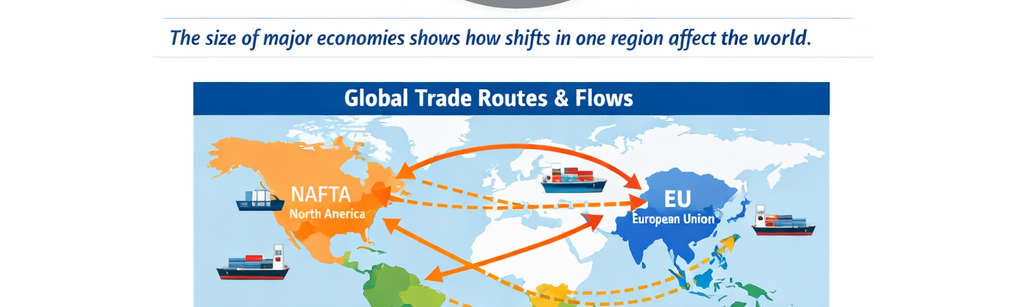
Financial stress does not stay confined to one country. When inflation rises in a major economy, it can influence prices globally. Trade disruptions in one region can slow the delivery of goods elsewhere, affecting jobs and consumption. Currency fluctuations ripple across borders, altering investment and consumer behavior worldwide. Even when individuals are unaware, their daily lives are influenced by these global economic currents, demonstrating just how interconnected the modern world has become.
Politics adds uncertainty
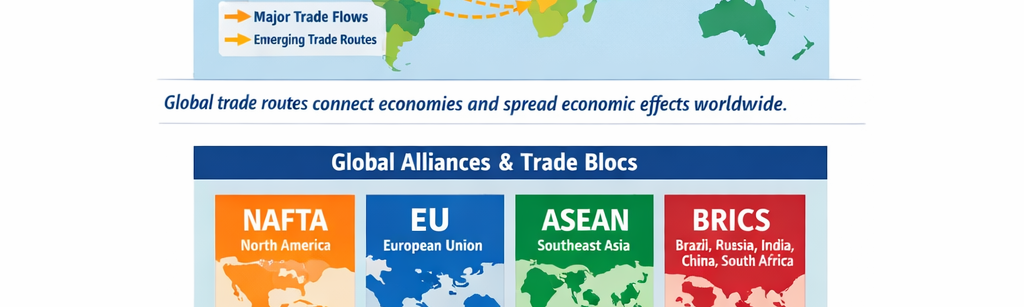
Political systems rely on trust, cooperation, and predictability. When confidence erodes—through corruption, conflict, or policy disagreement—decisions become slower, compromises rare, and governance more fragile. While this rarely causes total collapse, it amplifies uncertainty. Policies may shift unexpectedly, regulations can change, and international agreements may falter.
As Brookings notes, geopolitical tensions and policy uncertainty remain key risks for global stability, influencing both trade and financial markets (brookings.edu).
Social tension reflects deeper strain
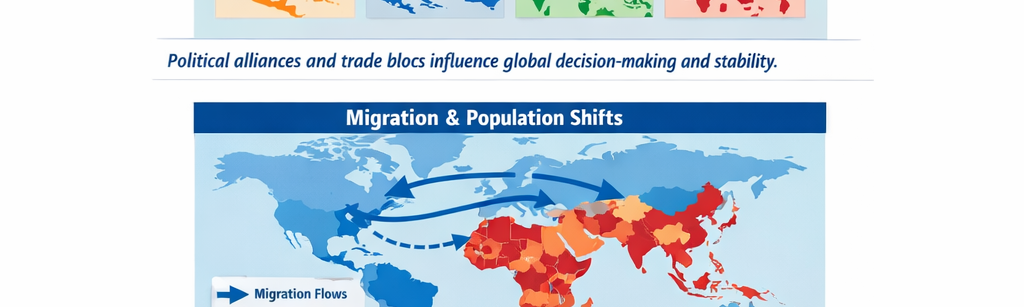
Social challenges often mirror underlying economic and political pressures. Migration patterns, inequality, and demographic transitions reflect broader forces at play. Communities react to perceived scarcity, inequality, or uncertainty. As people adjust, tensions can rise, protests may occur, and social cohesion is tested. While these changes are natural over time, they contribute to the perception that the world is unstable—even when the system itself continues to function.
Why everything feels connected
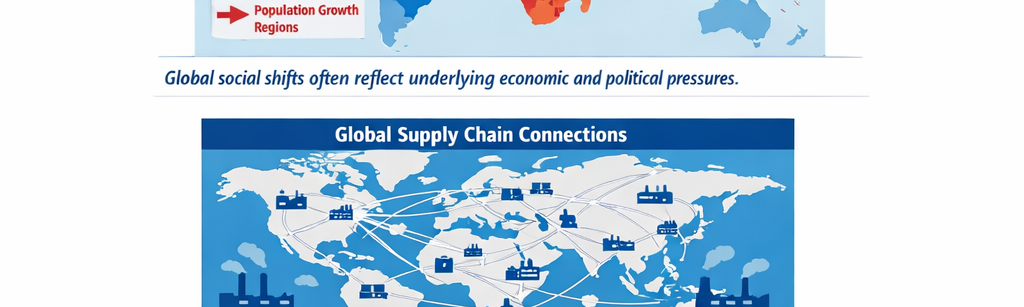
Modern life links people, countries, and systems more closely than ever before. Supply chains stretch across continents, financial systems respond instantly to market shifts, and information flows globally in seconds. This connectivity allows innovation and growth to spread rapidly, but it also spreads stress. A financial setback, political crisis, or natural disaster in one region can influence people and economies thousands of miles away, reinforcing the feeling that the world is fragile.
Why stability feels harder to regain
Stability requires alignment, trust, and time. In a world of connected pressures, coordination is increasingly difficult. Each country faces unique challenges simultaneously—economic, political, social, and environmental—making synchronized solutions harder to implement. Long periods of previous stability can inadvertently create fragility, because systems may lack resilience to overlapping pressures. As a result, recovery can seem slow, uneven, and frustrating.
What this tells us about the world
Even though instability feels overwhelming, it often follows predictable patterns. Economic, political, and social pressures rise and fall over time. Recognizing these cycles helps replace panic with perspective. The world is not collapsing; it is adjusting. Understanding the underlying forces—how they interact, and how people experience them—creates clarity. It allows us to see global events as part of a broader story, not isolated crises.
Observing patterns over time
Patterns reveal more than individual events. By studying history, trade flows, migrations, and policy changes, we see recurring behaviors. Instability often returns, but so does adaptation. Economies adjust, governments reform, and societies innovate. While it may feel like chaos today, much of it is part of longer-term adjustments that have repeated throughout history.
Living with a connected world
The modern world offers incredible advantages: instant communication, global trade, and shared knowledge. But the same connectivity means that pressures spread faster, and problems resonate farther. Understanding this reality—without fear or overreaction—can help individuals, communities, and policymakers make better sense of events as they unfold. Perspective is often the most valuable tool in an interconnected world.
Insight for everyday life
While global instability can feel abstract, it influences tangible aspects of daily life: prices, job security, access to goods, and social dynamics. Recognizing that these challenges are interconnected, rather than isolated or purely local, helps people make informed decisions and remain calm. Awareness replaces confusion, and context replaces anxiety.
Calm reflection
The world is constantly changing. Instability is part of the system, not a sign of collapse. Understanding the patterns behind economic, political, and social pressures provides clarity. By observing these forces over time, we see how the world adjusts and adapts. In a connected, fast-moving world, insight is more valuable than reaction.
For more visit